


How to Choose the Right Feed Mixer Wagon Capacity for the Number of Cows
Choosing the right feed mixer wagon capacity has a major impact on the quality of the prepared TMR and the organisation of daily work on the farm. A mixer wagon that is too small requires additional batches, while an oversized machine may struggle to mix smaller quantities of feed correctly.
So, how should you choose the right feed mixer wagon capacity for the number of cows? For smaller farms, a simple guideline can be used:
Allow approximately 1 m³ of nominal feed mixer capacity for every five dairy cows.
This is an approximate value based on preparing the entire daily feed ration in one batch. The actual volume of TMR depends on its composition, moisture content and the proportion of forage in the ration.
What Feed Mixer Wagon Capacity Do You Need for Your Herd?
The table below provides a quick estimate of the required feed mixer wagon capacity for a dairy farm.
| Number of dairy cows | Approximate mixer wagon capacity |
|---|---|
| 20 cows | approximately 5 m³ |
| 25 cows | 5–6 m³ |
| 30 cows | 6–7 m³ |
| 35 cows | 7–8 m³ |
| 40 cows | 8–9 m³ |
| 45 cows | 9–10 m³ |
| 50 cows | 10–12 m³ |
| 60 cows | 12–14 m³ |
These values assume that the entire daily TMR ration is prepared in one batch, with enough free space left inside the tub for proper mixing.
The table should be treated as a guide for initial selection. The final choice also depends on the type of ration, the size of the bales being used, the tractor’s specifications and the conditions inside the farm buildings.
What Size Feed Mixer Wagon for 30 Cows?
For a herd of approximately 30 dairy cows, a feed mixer wagon with a capacity of 6–7 m³ will usually be suitable.
On farms with smaller buildings, the compact single-auger FIDER-i MINI can be a good choice. Its small dimensions make it easier to manoeuvre around tight farmyards and pass through lower or narrower entrances.
Before choosing a specific capacity, it is also important to consider the size of the bales. The mixer wagon should provide enough space for the bale to be processed and mixed freely with the remaining ingredients.
What Size Feed Mixer Wagon for 40 Cows?
For approximately 40 dairy cows, it is worth considering a mixer wagon with a capacity of 8–9 m³.
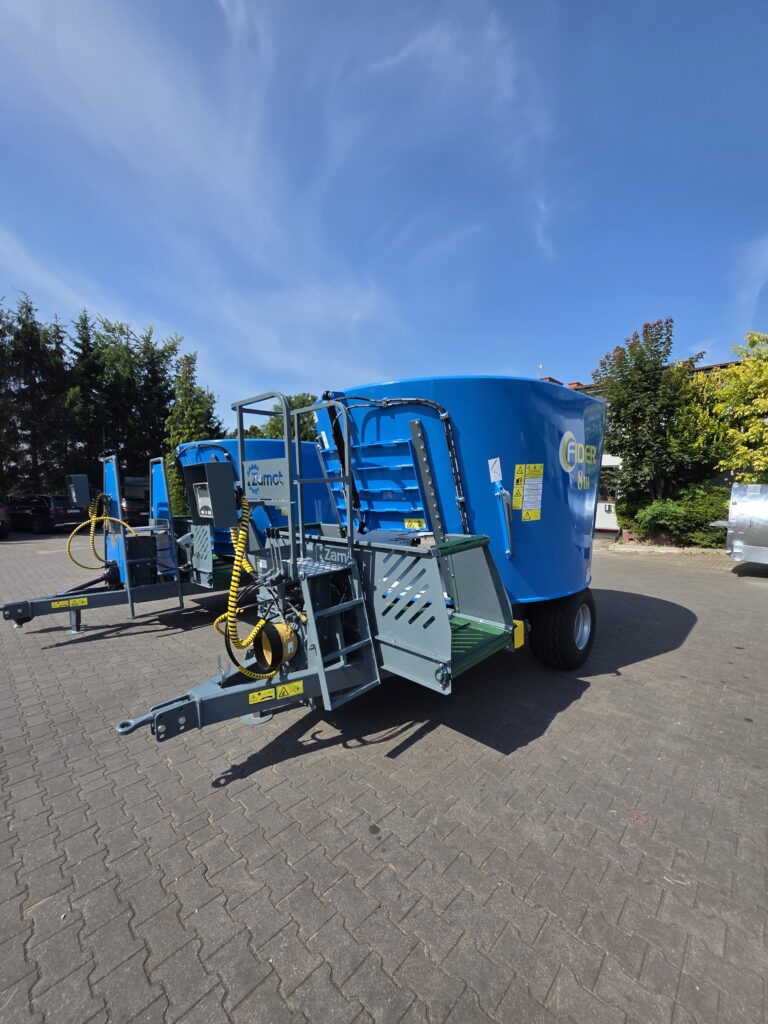
The single-auger FIDER-i EKO and FIDER-i feed mixer wagons are suitable options within this capacity range. They make it possible to prepare the daily ration in one batch without having to use a considerably larger twin-auger machine.
When choosing a particular model, the planned development of the farm should also be considered. If the herd is expected to grow in the near future, it is sensible to allow a reasonable reserve of capacity.
What Size Feed Mixer Wagon for 50 Cows?
For a herd of approximately 50 dairy cows, the recommended feed mixer wagon capacity will usually be 10–12 m³.
A manoeuvrable single-auger mixer wagon can still be suitable for a farm of this size. Within the ZAMET range, an appropriate solution would be a model from the FIDER-i EKO or FIDER-i series.
The choice between 10, 11 and 12 m³ should depend mainly on:
- the actual quantity of feed being prepared,
- the proportion of straw, hay and grass silage,
- the size of the bales,
- any planned increase in herd size,
- the power of the available tractor,
- the height and width of the barn entrance.
If the ration is light and bulky, or if the farm plans to increase the size of the herd, the larger version may be the safer choice.
Why Shouldn’t You Choose a Feed Mixer Wagon That Is Only Just Large Enough?
The nominal capacity of a feed mixer wagon does not mean that the tub should be filled right to the top. The feed requires enough free space to circulate properly inside the mixer.
Overfilling a mixer wagon can result in:
- feed spilling over the sides of the tub,
- uneven mixing of ingredients,
- longer preparation times,
- increased load on the tractor and drive system,
- difficulties processing long and fibrous materials.
For this reason, the nominal capacity of the mixer wagon should be slightly greater than the actual volume of feed being prepared.
However, it is also important not to go too far in the opposite direction. A very small batch may not mix correctly inside an oversized tub. The machine should therefore be matched both to the current number of animals and to the farm’s realistic development plans.
One Large Batch or Two Smaller Batches?
The capacity ranges presented above assume that the entire daily ration is prepared in one batch. This approach reduces the number of journeys, operator working time and fuel consumption.
It is also possible to choose a smaller feed mixer wagon and prepare the ration in two batches. For example, a farm with 60 cows could use a smaller machine by dividing the daily ration into two parts.
However, this means:
- loading the ingredients twice,
- carrying out two mixing cycles,
- spending more time in the tractor,
- using more fuel,
- increasing wear on the tractor and mixer wagon.
For smaller farms, it is usually more practical to choose a mixer wagon that can prepare the entire daily feed ration in one batch.
How to Choose a Feed Mixer Wagon for Beef Cattle
Beef cattle generally consume less fresh feed than high-yielding dairy cows. Therefore, a smaller mixer wagon can usually be used for the same number of animals.
The following values can be used as an approximate guide:
| Number of beef cattle | Approximate mixer wagon capacity |
|---|---|
| 30–40 animals | approximately 5 m³ |
| 50 animals | approximately 6 m³ |
| 60 animals | approximately 7 m³ |
| 80 animals | 9–10 m³ |
| 100 animals | 11–12 m³ |
| 120 animals | approximately 14 m³ |
Differences between farms can be particularly significant in beef production. Younger and lighter cattle consume less feed than animals in the final finishing stage. The table should therefore be treated as a starting point rather than a fixed rule.
What About a Mixed Herd?
If dairy cows and beef cattle receive the same TMR, the requirements of both groups must be considered. Providing only the total number of animals is not sufficient, because a dairy cow generally consumes more feed than a beef animal.
The number of dairy cows and beef cattle should therefore be considered separately when estimating the required mixer wagon capacity.
If the different groups receive separate rations, each batch should be assessed individually. The capacity of the mixer wagon should then be selected mainly according to the largest batch being prepared.
Single-Auger or Twin-Auger Feed Mixer Wagon?
For farms with up to approximately 50 cows, a single-auger mixer wagon will usually be sufficient. This type of machine is shorter, more manoeuvrable and easier to use inside smaller farm buildings.
The ZAMET range includes three single-auger product lines:
- FIDER-i MINI 5–7 m³ – for smaller farms and buildings with limited space,
- FIDER-i EKO 7–12 m³ – an economical range of single-auger mixer wagons,
- FIDER-i 7–12 m³ – a reinforced design with more extensive standard equipment.
For herds approaching 60 cows, bulky TMR rations or farms planning further expansion, a twin-auger mixer wagon may be worth considering:
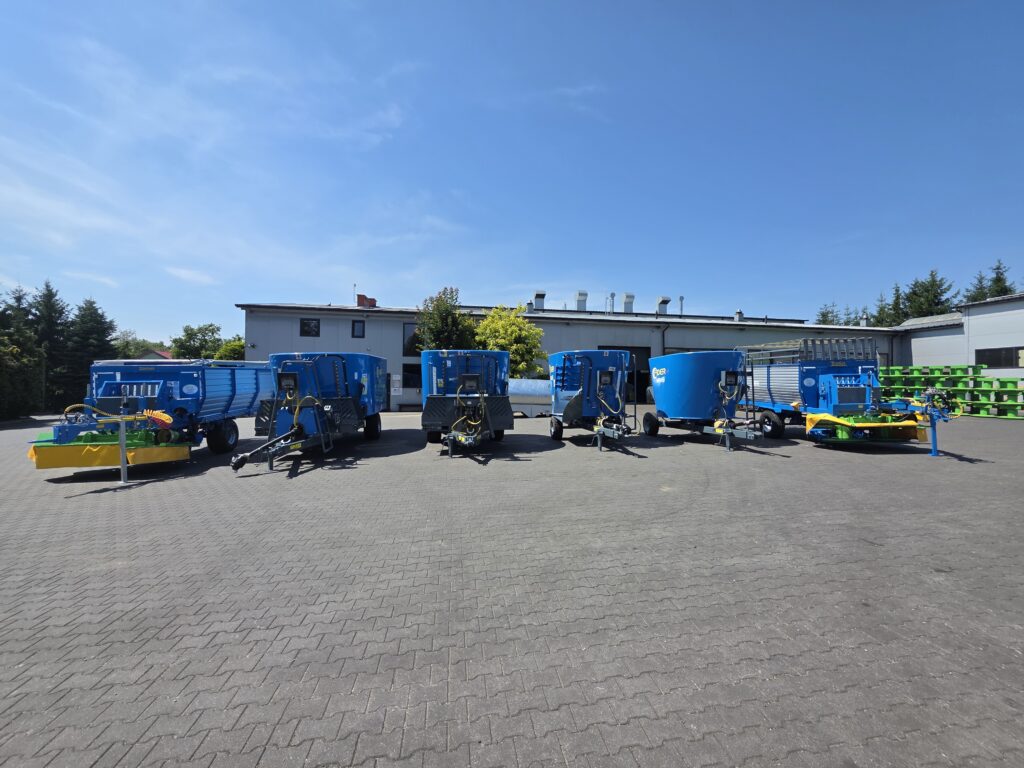
- FIDER-i 2S EKO 12–14 m³,
- FIDER-i 2S 14–20 m³.
Two augers make it possible to prepare larger batches, but the machine is also longer. Before purchasing, make sure that it will be able to move freely around the farm and inside the buildings.
What Else Should You Check Before Choosing a Feed Mixer Wagon?
The number of animals and the required capacity are only the starting point. Before choosing a particular model, you should also consider the conditions in which the machine will operate.
Tractor power
A larger mixer wagon and a heavier batch require sufficient tractor power. This is particularly important when processing complete bales or working with long, dry and fibrous materials.
Barn dimensions
Before purchasing a mixer wagon, measure the height and width of all entrances, feed passages and other access points. In older or lower buildings, a compact mixer wagon with a smaller tub diameter will often be the better choice.
Type of ration
A wet TMR containing a high proportion of maize silage occupies a different volume than a lighter ration containing large amounts of grass silage or straw. Two farms with the same number of cows may therefore require different mixer wagon capacities.
Bale size
Large bales require sufficient space so that the auger can process them efficiently. In a small and heavily loaded tub, this process may take longer.
Feed discharge system
The type of discharge door or conveyor should be matched to the layout of the feed passage. A correctly selected discharge system makes it possible to distribute the TMR evenly on one or both sides of the machine.
How to Choose Feed Mixer Wagon Capacity – Summary
For smaller and medium-sized farms, a practical guideline is to allow approximately 1 m³ of nominal mixer wagon capacity for every five dairy cows.
In practice, this means that:
- for approximately 30 cows, a 6–7 m³ mixer wagon will usually be suitable,
- for approximately 40 cows, an 8–9 m³ model is worth considering,
- for approximately 50 cows, a 10–12 m³ mixer wagon will generally be appropriate,
- for approximately 60 cows, a 12–14 m³ model may be required.
These values are approximate. The final choice depends on the type of TMR, the number of batches being prepared, bale size, tractor power and barn dimensions.
ZAMET manufactures feed mixer wagons with capacities ranging from 5 to 20 m³. Our range includes single-auger and twin-auger models that can be adapted both to smaller farms and to growing herds.
Not sure which model to choose? Contact us. Based on the number of animals, the type of feed and the conditions on your farm, we will help you select the right feed mixer wagon capacity and equipment.